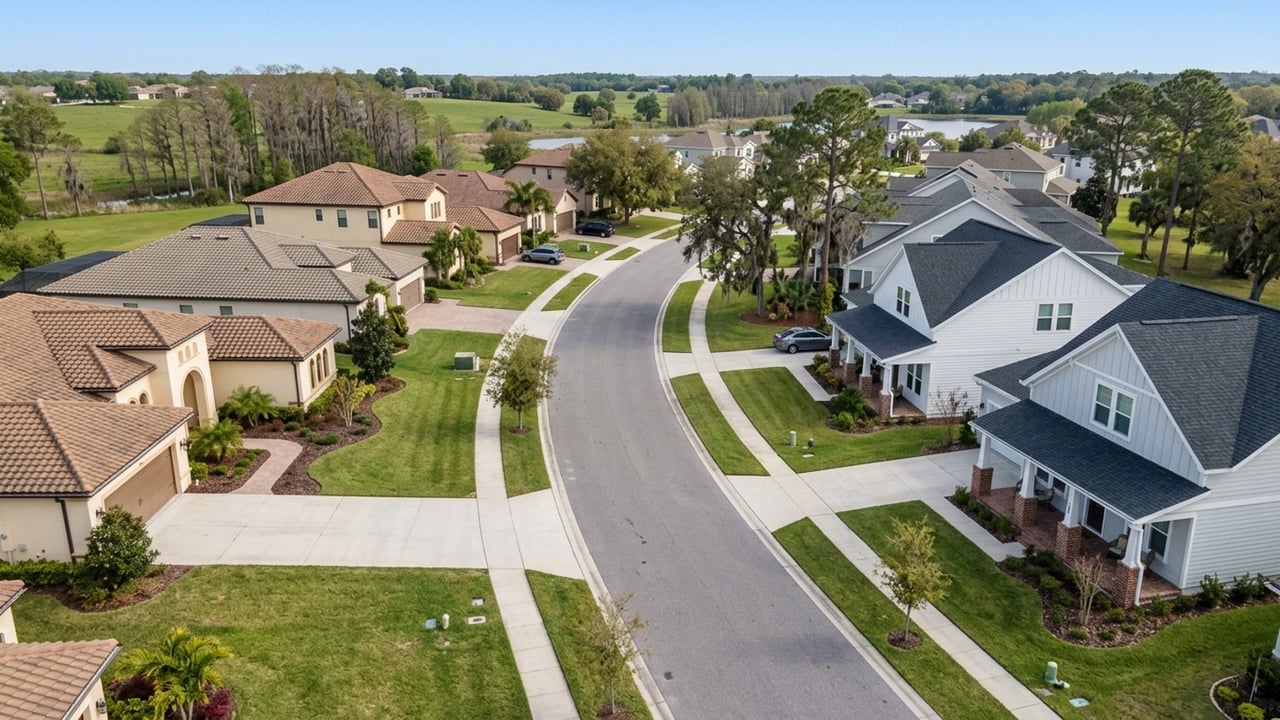
Selling Timeline and Average Days on Market in Odessa, FL
Blog Anne Bromberg October 5, 2026
Blog Anne Bromberg October 5, 2026
The median sale price in Odessa, FL, recently hit roughly $540,000, and sellers are working through a timeline that looks a little different than it did a couple of years ago. If you know how long selling a home in Odessa takes, you can plan your move, time your next purchase, and walk into this without unrealistic expectations.
How quickly a home sells depends on local supply, the condition of the property, and when you decide to list. Some homes in the 33556 zip code go under contract in a matter of weeks. Others sit longer - usually because they're priced above what current inventory will support.
The median days on market for homes in Odessa is approximately 49 days. During that same period, the area had about 58 active listings and 6.4 months of housing supply - a balanced market where buyers have real options and aren't in a rush.
That said, depending on the source and the time of year you're looking, the numbers can tell different stories. Altos Research data from late September 2026 puts average days on market closer to 97 days. Meanwhile, platforms like Zillow or Redfin have reported homes going pending in as little as 28 to 37 days. Neither figure is wrong - they're measuring different slices of the market at different moments.
To make sense of any of these numbers, it helps to see how Odessa compares to the surrounding area and the state.
Pasco County tracks fairly closely to Odessa. A June 2026 market report found that the median single-family home in the county took about 40 days to go under contract and 81 days from listing to closing.
Statewide, the timeline runs a bit longer. August 2026 data shows Florida's median days on market at 73 days, while Houzeo reported an average of 63 days with 5.9 months of supply.
Zoom into the 33556 zip code and the pacing shifts a little depending on the month. Movoto's June 2026 data showed homes spending a median of 60 days on the market. Earlier in the year, Redfin reported homes in 33556 selling after 36 days. That kind of swing within a single zip code shows how quickly buyer demand can shift at a specific price point.
Days on market only measures how long a house sits active on the multiple listing service before a buyer signs a contract. The total timeline - from deciding to sell until you hand over the keys - is considerably longer.
Plan for three to five months, start to finish. That's not a worst-case scenario; that's a realistic range for most sellers.
Getting a house ready for the public usually takes two to four weeks. That window covers decluttering, deep cleaning, minor repairs, and staging the rooms so they photograph well. Once the house is ready, your agent will schedule professional photography and finalize the listing.
Don't rush this part. Poor photos are one of the most reliable ways to extend the time your home sits unsold.
This is the active phase - currently hovering around a median of 49 days in Odessa. Buyers tour the home, open houses happen, and you wait. If the home is priced well and in good condition, you might see serious offers within the first couple of weeks. Homes that need work or are priced above comparable sales take longer to attract a buyer who's genuinely ready to move.
After you accept an offer, closing typically takes 30 to 45 days. The buyer completes their inspection, secures an appraisal, and works through mortgage underwriting. Cash sales can close much faster - sometimes in as little as 10 to 14 days - because those buyers bypass the lender's appraisal and financing requirements entirely.
Not every home in Odessa sells in the median 49 days. Some go under contract over a weekend. Others sit for months. The difference usually comes down to a few things you can control, plus the broader economic conditions in Pasco County.
Price is the single biggest lever. Homes in Odessa recently sold for approximately 95.5% of their list price, and only about 11% sold above asking. Sellers who overprice have to make reductions later, which extends the timeline and signals to buyers that the home has been sitting - neither of which helps you. Pricing accurately from day one brings more buyers in while the listing still has momentum.
Move-in ready homes sell faster. Buyers discount a home's value when they see an old roof, an outdated HVAC system, or visible cosmetic damage - and then they often walk away after the inspection confirms what they already suspected. Making smart repairs before listing prevents that. If you choose not to make repairs, you'll need to price lower to account for the work the buyer will inherit.
Odessa recently had 6.4 months of supply, meaning inventory is relatively healthy. When supply rises above six months, buyers have more choices and take their time. In that environment, your property needs to stand out to get a quick offer - because the buyer has somewhere else to go if it doesn't.
Florida's seasonal patterns don't follow the same script as markets with harsh winters, but there's still a rhythm worth knowing. Timing your listing can affect both your final sale price and how fast you find a buyer.
You can sell in Odessa year-round. That's true. But some months bring more foot traffic and serious offers than others.
Spring is traditionally strong across Florida. Buyers looking to move after the school year ends flood the market from March through May. Winter is a different story than most sellers expect - snowbirds and out-of-state buyers frequently shop between January and April, which keeps the Tampa Bay Area active when much of the country slows down.
Late summer and early fall are the slowest stretch. By August and September, households are settling into the school year, and peak hurricane season can temporarily disrupt activity. The holiday weeks in late November and December also see a drop - people are traveling and less likely to tour homes or submit offers.
A listing goes stale when it sits active well past the local average without any offers. In Odessa, if your home is approaching 90 days on the market, buyers start to assume something is wrong with it - even if there isn't. Stale listings tend to attract lowball offers because buyers sense they have the upper hand. The sooner you recognize a stall, the more options you have to fix it.
The most common correction is a price reduction. If you've had consistent showings but no offers, the market is telling you the price doesn't match what buyers think the home is worth. Sometimes the fix is more straightforward - new photos, an updated property description, or addressing a visible repair issue can bring fresh attention to a listing that's gone quiet.
If the home has structural issues or needs major renovations, buyers using traditional financing may not be able to get the loan approved. In those situations, selling as-is to an investor is worth considering. Cash buyers close quickly and don't require repairs. The trade-off is a lower net sale price - that's the cost of the speed and certainty.
A job change, a divorce, or a financial shift can force a sale much sooner than you planned. You can legally sell a house the day after you buy it. The question is what it costs you to do so.
Selling within the first few years often means you haven't built enough equity to cover closing costs and agent commissions. That can put you in the position of bringing cash to the closing table just to get out of the property.
If the home appreciated, you'll owe capital gains taxes on the profit unless you meet the IRS requirements for the primary residence exclusion. To qualify, you must own and live in the home for at least two of the five years before the sale. That exclusion allows single filers to exclude up to $250,000 of profit and married couples filing jointly to exclude up to $500,000. Sell before hitting two years and your net profit is likely subject to short-term or long-term capital gains taxes.
If you recently refinanced, check your loan documents for a prepayment penalty before you list. Some lenders charge a fee if you sell or pay off the mortgage within the first year or two of the new loan. For inherited properties, an executor can generally sell once the probate court grants them the authority - and the timeline there depends more on the local court's backlog than on real estate market conditions.
How long a sale takes matters. How much you walk away with matters just as much. Net proceeds are what's left after paying off your mortgage and covering all the transaction fees.
With Odessa's median sale price around $540,000, knowing the cost breakdown keeps you from being caught off guard when you're planning your next purchase.
Sellers typically cover real estate commissions for both their agent and the buyer's agent, title insurance, documentary stamp taxes on the deed, and prorated property taxes. In Florida, those closing costs and commissions generally total between 6% and 9% of the sale price. On a $540,000 home, that's roughly $32,400 to $48,600 out of the proceeds at closing.
Online estimates give you a rough starting point, but they can't account for your home's specific upgrades, lot location, or condition. A local real estate agent can prepare a comparative market analysis using recent sales in your specific Odessa neighborhood - and that gives you a realistic listing price along with a clearer picture of your expected timeline.
Recent data shows the median days on market for a home in Odessa is roughly 49 days. The full process, from preparing the home for sale to the final closing day, typically takes three to five months.
A listing is generally considered stale if it sits active for more than 90 days without an offer. At that point, buyers often assume the property is overpriced or has hidden defects, and a price reduction is usually necessary.
Late summer and early fall - particularly August and September - are often the hardest times to sell. Many households are focused on the start of the school year, and peak hurricane season can temporarily stall buyer activity.
Consider a price reduction if your home has been on the market for 30 to 45 days with consistent showings but no offers. If you're getting no showing requests at all in the first two weeks, you may need to adjust the price sooner.
To avoid paying capital gains taxes on the profit from a primary residence, you must own and live in the home for at least two of the five years preceding the sale. Selling before that two-year mark means your profit may be subject to taxation.
Your final take-home amount is the sale price minus your remaining mortgage balance and closing costs. In Florida, seller closing costs and agent commissions typically consume 6% to 9% of the total sale price.
Stay up to date on the latest real estate trends.
Blog
Blog
Blog
Blog
Blog