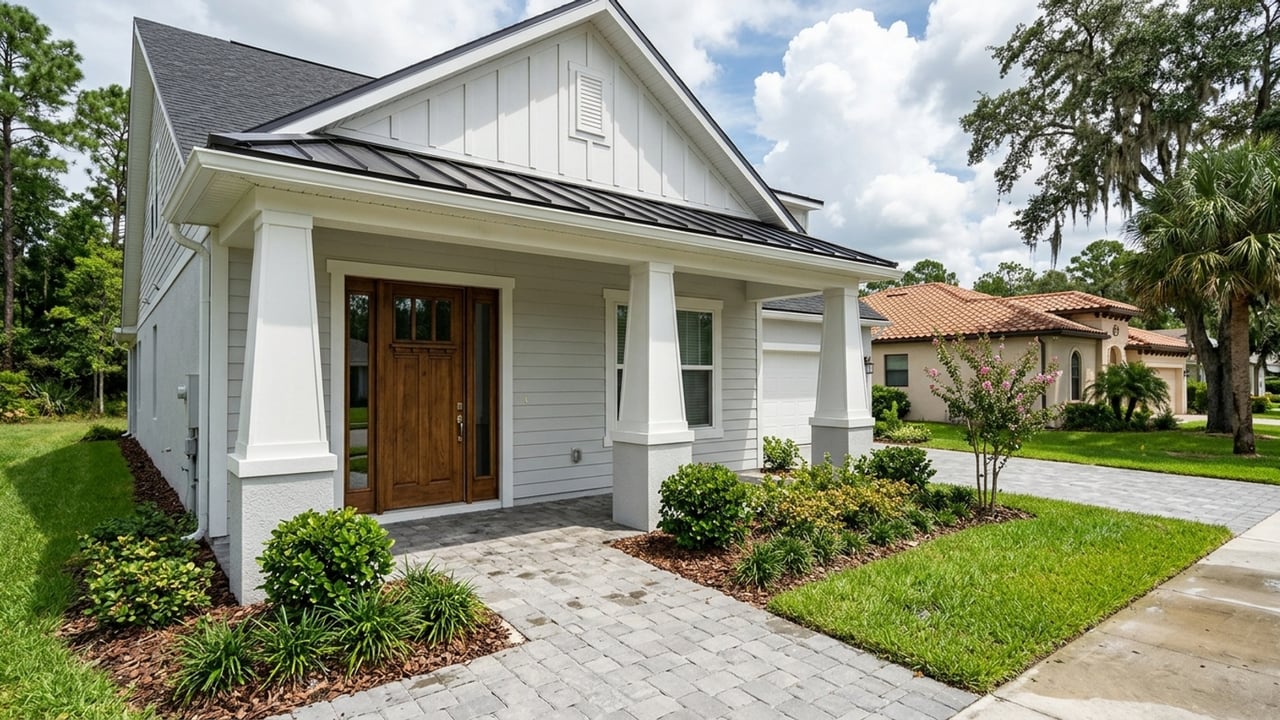
Costs and Steps to Build Your Own Home in Odessa, FL (2026)
Blog Anne Bromberg November 6, 2026
Blog Anne Bromberg November 6, 2026
The single-family median sale price in Odessa, FL, sits around $600,760, down about 22.2% from last year based on a small sample of 18 recent sales. With inventory sitting on the market for over two months, resale buyers have negotiating power that a new construction site rarely offers.
Taking on a new build means managing land purchases, county fees, and construction timelines while competing with that existing inventory. You need to know exactly what goes into the all-in cost before breaking ground.
Build in Odessa when you own or can buy a lot and want acreage or a floor plan that resale listings cannot match. Otherwise, buying a resale single-family home is usually the cheaper start, because 6.8 months of supply gives buyers room to negotiate on price. If you want a new house without managing a raw lot, building with a production builder in a planned community offers a middle route.
You are deciding whether to build a home in Odessa, on your own lot or with a builder, or to buy an existing house, and you want to know what each path costs before you commit.
In Odessa, building only pays off when the lot or the design gives you something the resale market cannot. Whatever you build has to compete with, and appraise against, single-family resales trading at roughly 96.2% of their list price. With single-family homes taking a median 77 days to sell, buyers already hold real negotiating room.
A falling resale median creates another problem: a construction lender's "as completed" appraisal may land below what you spent to build. If that appraisal comes in short, the bank won't cover the gap. The difference comes directly out of your cash.
Building wins when a specific parcel or a custom floor plan buys you something the current inventory lacks. But comparing a builder's quote against the resale market means pricing out land, site work, and county fees alongside the structure itself.
Getting a new home out of the ground looks very different depending on who owns the land and who manages the trades. You can hand the entire process to a developer, buy your own parcel and hire a custom builder, or pull the permits yourself.
The right path depends on how much cash you have upfront and how much time you can put into managing the site. Each choice shifts who carries the risk for delays, failed inspections, and appraisal gaps.
This route gives you control over the lot size, the home's orientation, and a floor plan no resale listing offers. Larger-lot custom homes frequently cluster in the Keystone area, though exact boundaries blur. Look up your specific parcel on the county property appraiser site first to confirm jurisdiction.
Odessa is an unincorporated community, so zoning, setbacks, and permits come from the county where the parcel sits, not a city hall. The community and its 33556 mailing area straddle the county line. The official Census-designated place is entirely within Pasco County, but the postal mailing area stretches into Hillsborough County.
To compare lot sizes with neighboring areas, check out how Odessa compares to Tampa, and explore the different home styles available locally. The downside to this route is that you carry everything: the land, the site work, the construction loan, and the risk that the finished house appraises below cost if resale prices slide.
This is the middle route for buyers who want new construction without dealing with raw land. The builder already owns the lot, has utilities in place, handles county permits, and lets you pick a plan and finishes. Starkey Ranch is a well-known example of this setup in the area.
Register your own agent on your first visit to a builder's model home. The on-site sales representative works for the builder, not for you. To understand how these developments fit into the local market, review the different neighborhoods in Odessa.
Starkey Ranch homes carry a community development district (CDD) assessment on the property tax bill on top of HOA dues. What you give up is total control: customization stops at the builder's option sheet, and the CDD assessment plus HOA dues add a monthly cost a resale home outside a district may not have.
Florida allows property owners to pull permits for their own home under an owner-builder exemption. In practice, that means you hire, schedule, and supervise each licensed trade and take full responsibility for passing county inspections.
Ask lenders upfront whether they finance owner-builders at all, because many construction lenders won't touch this structure. You'll often need cash or a much larger down payment, and every scheduling mistake costs you time on a loan that's charging interest the whole way through.
A builder's advertised base price rarely represents the total cost to move into a finished house. When you build on your own lot, the final bill splits into three distinct phases: acquiring the land, preparing the site, and constructing the house.
Resale homes already include the land, the well or sewer hookups, and the county impact fees. A custom build requires you to pay for each piece separately, which is why you have to add all three phases together before the comparison means anything.
Before making an offer on any parcel, look up which county it's in, verify the zoning and deed restrictions, and ask the county utility whether water and sewer lines reach the lot. If they don't, you'll need to price out a well and septic system.
Check the lot's flood zone on the FEMA Flood Map Service Center before you buy. The FEMA site lets you search by street address to determine a property's flood zone and base flood elevation. Review the state's flood and sinkhole disclosure rules too.
A cheap lot often turns out to need the most expensive site work. Fill dirt, clearing, a well, and a septic system can quickly close the gap with a pricier lot that already has utilities at the street.
Costs pile up before a foundation is ever poured. Clearing, fill dirt, building permit fees, and county mobility fees all hit before construction starts. A new single-family home in this area pays a one-time county mobility fee at permit, a cost buying resale never triggers.
Fees differ depending on whether your parcel sits in Hillsborough or Pasco County. In Hillsborough County, the mobility fee for a detached single-family home between 1,500 and 2,499 square feet is $9,183 in the Urban Assessment District and $13,038 in the Rural Assessment District. A single-family home built in Pasco County in 2026 carries a one-time mobility fee of $11,660 paid by the builder.
Permit fees vary by jurisdiction as well. Hillsborough County sets residential new-construction rates at approximately $1.00 per square foot; Pasco County charges $0.40 per square foot with a $200 minimum. If you need a well and septic system, check the local utility guidelines. You won't know the septic system's design or cost until a soil evaluation is done, so budget a contingency and get that test before closing on the lot.
Structural costs in Florida are dictated by wind-load requirements. The Florida Building Code dictates design wind speeds, and maps show basic wind speed lines of 110 MPH to 120 MPH across Hillsborough and Pasco counties. Ask each builder exactly what their per-square-foot quote includes, from site work and permits to the driveway and landscaping.
To see if building makes sense, compare your total estimated costs against the single-family resale median of $247 per square foot. For a 2,500-square-foot home, the same space costs about $617,500 already built on the current resale market.
Add your lot price, site work, mobility fees, and the builder's construction cost per square foot multiplied by 2,500. If the total exceeds $617,500, the build costs more than resale, and that difference is what you're paying for the custom lot or plan. One caveat: per-square-foot quotes usually cover the house only, so comparing one directly with a resale price that already includes land and site work flatters the build.
Securing the money and the legal right to build requires working with specialized lenders and county government offices. The process moves slower than a standard mortgage closing because the bank and the county both need to approve the structural plans.
Your timeline depends entirely on how fast the county processes paperwork and how quickly your builder completes each stage of work.
Construction-to-permanent loans involve a single closing upfront, with funds released in draws as the builder passes staged inspections. For qualifying borrowers, an FHA One-Time Close mortgage requires a minimum 3.5% down payment and rolls the land cost into the builder's price if purchased together. The loan converts automatically to a standard FHA permanent mortgage once construction is complete.
On a construction loan, the bank lends against what the house is expected to appraise for once finished, not against what you spend. The lender sets the loan on an "as completed" appraisal built from nearby resale comps, so softening resale prices directly affect how much you can borrow. Ask lenders what draw schedule and contingency they require.
If the as-completed appraisal comes in below your total cost, the lender won't cover the gap. You have to bring that difference in cash.
The permit sequence starts with confirming the parcel's county, submitting plans, and securing the building permit. Once construction begins, the builder must pass staged inspections for the foundation, framing, and mechanical systems before the county issues a certificate of occupancy. Well and septic permits come from separate agencies.
Review times depend on the specific county office. Pasco County's Building Construction Services Department has an official performance goal to complete initial reviews of new single-family residential building permits within 10 business days. After completion, the county property appraiser will reassess the home for property taxes.
Plan review and failed re-inspections add weeks you pay for in construction-loan interest. The county where your parcel sits, not your mailing address, sets those timelines.
Choosing between a new build and a resale home comes down to your budget, your timeline, and how much control you want over the property. Ask yourself these questions to narrow down the right path:
Start your search with single-family resale if you want the most house for your money in the current market. Consider a custom home on your own lot if you want acreage or a plan no listing offers, and you already own the parcel. Choose a production builder in a planned community like Starkey Ranch if you want a new home without buying land or managing well, septic, and permits yourself.
Pulling current comparable sales to test a builder's quote against the resale market is a useful next step either way. If an existing home makes more sense, review the local buying options before you go further.
The figures below reflect closed sales across the local market. You can use this data to compare a builder's total price against what buyers are paying for completed houses right now. For more context on these trends, review the Odessa housing market updates.
Odessa spans more than one county, covering parts of Hillsborough and Pasco counties. The official Census-designated place sits entirely within Pasco County, but the 33556 postal mailing area stretches into Hillsborough. Check your specific parcel on the county property appraiser site, because the parcel's county decides zoning, permit fees, and mobility fees for a build.
No, Odessa is an unincorporated community with no city government or city building department. Building rules and inspections come from the county where the property is located and the state's Florida Building Code. Wind speed contour lines for structural design, for example, are set by the state and enforced by either Hillsborough or Pasco County.
Yes, Florida allows property owners to act as their own builder under a specific owner-builder exemption. You must sign a disclosure statement, you cannot sell or lease the home for a set period after completion, and you are still required to hire licensed subcontractors for certain specialized trades.
The cost depends entirely on the builder's price per square foot, plus the land and site work. A base construction quote for a 2,000-square-foot home excludes the lot purchase, clearing, well or septic installation, and county mobility fees. You'll need to add those separate phases together to get an accurate total.
It depends on the land and the county fees. If you subtract the cost of a vacant lot and a county mobility fee, which runs $11,660 in Pasco County or up to $13,038 in rural Hillsborough County, the remainder dictates how much house you can afford to construct. Get an itemized quote from a builder to see what size home fits the remaining budget.
The timeline breaks down into county plan review, separate well and septic permitting, and the actual construction phases. Pasco County aims to complete initial reviews of new single-family permits within 10 business days, but failed inspections or supply delays will extend the build. Get a written schedule from the builder before signing a contract.
Stay up to date on the latest real estate trends.
Blog
Blog
Blog
Blog
Blog
Blog
Blog
Blog
Blog