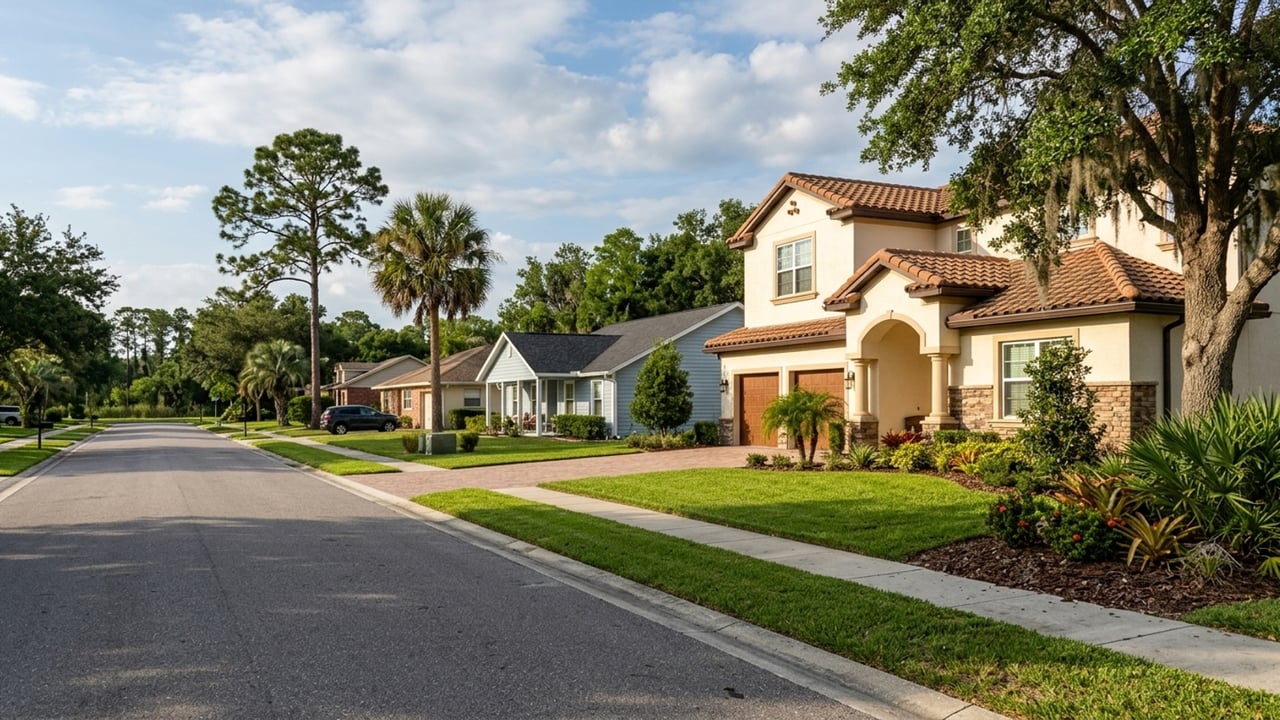
What to Expect From Seller Closing Costs in Odessa, FL
Blog Anne Bromberg October 5, 2026
Blog Anne Bromberg October 5, 2026
Odessa's median sale price is sitting around $540,000 right now, and homes are averaging about 49 days on the market before going under contract. When selling a home in Odessa, FL, it's worth understanding exactly what gets taken out of that sale price - because what you walk away with and what the buyer pays are two very different numbers.
Florida sellers deal with a specific set of taxes, title fees, and commissions that buyers don't touch. Getting a handle on these early means you're not doing mental math at the closing table.
Florida sellers pay approximately 3.25% of the home's sale price in closing costs, and that's before you factor in agent commissions. These fees cover the legal, administrative, and tax requirements to transfer ownership from you to the buyer.
Your exact total depends on the final contract terms and where the property sits. In Pasco County, the local tax rates are specific to every transaction - which means your numbers will look a little different than a seller's in a neighboring county, not dramatically, but enough to matter when you're planning your bottom line.
Sale proceeds are the raw number a buyer agrees to pay. Closing costs are the mandatory fees that come off the top before any of that money reaches your account.
You won't need to bring a check to the closing table unless you owe more on your mortgage than the home is worth. The title company handles everything - all seller obligations get deducted directly from the buyer's purchase funds before anything is wired to you.
Buyers pay for the things tied to their financing: loan origination fees, the appraisal, inspections. Their costs center on verifying the home's condition and getting their loan across the finish line.
Sellers carry the cost of clearing the property's title and paying the state transfer taxes. Florida law and local custom set this division, though specific line items can shift during negotiations if the buyer pushes for it.
Odessa homes have recently sold for about 95.5% of list price on average - meaning sellers are already giving a little ground before closing fees enter the picture. Layer in the standard 3.25% in closing costs and the typical 5.5% to 5.6% in total agent commissions, and your total seller burden lands somewhere around 8.75% to 8.85% of the final sale price.
With about 58 available homes in current inventory, pricing your property accurately and budgeting for these deductions upfront gives you a realistic picture of what you're working with.
The 3.25% average covers title insurance, documentary stamp taxes, and standard settlement fees. It stays relatively stable regardless of whether the market is tilting toward buyers or sellers.
Agent commissions add another 5.5% to 5.6% on top of that, split between your listing agent and the buyer's agent. Both figures belong in your calculation from day one.
On a $300,000 sale, the 3.25% baseline equals approximately $9,750 - that's your state transfer taxes and standard title fees right there. Add a 5.5% total commission rate and you're looking at another $16,500 in agent fees. Total transaction costs come to roughly $26,250, leaving $273,750 before your mortgage payoff.
At $400,000, the 3.25% average translates to $13,000 in closing costs, plus about $22,000 in agent commissions at 5.5% - roughly $35,000 in total deductions.
At $500,000, closer to the current Odessa median of $540,000, the 3.25% base equals $16,250. Add $27,500 in commissions, and the seller pays approximately $43,750 to close the deal.
Florida custom generally puts the documentary stamp tax on the deed and the owner's title insurance policy on the seller's side of the ledger. The buyer covers mortgage recording taxes and their own lender's title policy.
Your purchase agreement spells out who pays what, line by line. Standard practices guide most transactions, but the final split depends on the terms you agree to with the buyer.
Sellers pay the state documentary stamp tax to transfer the deed, and they also cover any outstanding property taxes prorated to the exact day of closing.
In Pasco County, it's customary for the seller to choose the title company and pay for the owner's title insurance policy. That policy protects the buyer against any hidden liens or ownership disputes that might surface after the sale.
Buyers handle their mortgage-related costs: appraisal fees, credit report pulls, loan origination charges, and the documentary stamp tax on their promissory note. If they want a property survey or specialized inspections, that's on them too.
Buyer closing costs typically fall somewhere between 2% and 5% of the loan amount, depending on the loan type and lender.
Everything in a Florida real estate contract is negotiable. A buyer might ask you to cover a portion of their closing costs in exchange for a higher purchase price - that's a common ask, and it's worth running the math carefully before you respond.
You can refuse to pay buyer concessions. But declining might cost you the buyer if they don't have the cash to close, and you'll want to weigh that against the reality of sitting on the market longer than the current 49-day median.
Pasco County charges a documentary stamp tax of $0.70 per $100 of the sale price on deeds. That's one of the larger fixed line items you'll see outside of agent commissions.
The title company will produce a standardized Closing Disclosure before you sign anything - it lists every charge, so you can see exactly where the money goes.
Florida's average total commission sits at approximately 5.5% to 5.6% of the sale price. That's typically split with roughly 2.7% to 2.9% going to your listing agent and the rest going to the buyer's agent.
Commissions come directly out of your sale proceeds at closing. You don't write a separate check - it's handled in the same settlement as everything else.
The $0.70 per $100 documentary stamp tax applies to the full purchase price. On a $500,000 sale in Odessa, that tax alone runs the seller $3,500.
The county also charges minor recording fees to file the new deed in public records. Those administrative fees typically land under $100.
Florida title insurance rates are state-regulated. They start at $5.75 per $1,000 for the first $100,000 of the sale price, then drop to $5.00 per $1,000 for anything above that - which usually puts the total somewhere between 0.5% and 1.0% of the sale price. Depending on the home's value, expect to pay somewhere between $500 and $3,500 for the policy.
The title company or escrow agent also charges a settlement fee - generally between $300 and $800 - for managing the paperwork and distributing the funds.
Odessa carries a median effective property tax rate of roughly 1.60% to 1.76%, which runs higher than the Pasco County average of 1.35%. You owe taxes for the exact number of days you owned the home during the current calendar year - not a full year, not a rough estimate.
If your community has a Homeowners Association, prorated HOA dues get added to the same calculation. The title company figures the daily rate and deducts the precise amount from your proceeds.
Your remaining mortgage balance is the biggest number coming off your gross sale price. The title company requests an official payoff statement from your lender to confirm the exact amount owed on the day of closing - that includes remaining principal and any interest accrued through the final month.
Once the buyer's funds arrive, the title company wires your payoff directly to your mortgage servicer. You don't have to coordinate that piece yourself.
Odessa currently has about 6.4 months of housing supply, which puts it in balanced market territory. That means accurate pricing and honest math aren't optional - they're how you plan your next move with any confidence.
Estimating your net proceeds means subtracting all fixed costs and your loan balance from your target sale price. A straightforward worksheet built around local averages gets you to a realistic number.
Start with your expected sale price. Subtract 5.5% for real estate commissions, then subtract 3.25% for Florida seller closing costs - that covers your documentary stamp taxes and title insurance. Then pull out your exact remaining mortgage balance and prorated property taxes based on Odessa's 1.60% to 1.76% rate.
What's left is your estimated net proceeds. That's the number you can count on for your next down payment.
Cash transactions close faster and skip the lender-mandated steps - no appraisal, no mortgage recording taxes on the buyer's side. But your core expenses as the seller don't change much.
You still owe the documentary stamp tax on the deed, the owner's title insurance policy, and agent commissions. A cash buyer makes the process cleaner, but it doesn't erase your state and county obligations.
On a $540,000 median-priced home, a seller paying 8.75% in total costs is looking at over $47,000 out of proceeds. That's real money, and some of it is negotiable.
State taxes and recording fees are fixed - there's no haggling with the county. But other line items have room, and knowing where to push before you list makes a difference.
Commissions aren't set by law. You can discuss rates with your agent before signing the listing agreement - some brokerages offer tiered packages depending on the level of marketing your home needs.
Buyer requests for closing cost credits deserve careful attention. Agreeing to cover $5,000 of a buyer's fees reduces your net proceeds by exactly $5,000, so it needs to factor into your minimum acceptable offer.
When you agree to contribute toward a buyer's closing costs, their lender sets the ceiling on how much you can give. For conventional loans, that cap is 3%, 6%, or 9% of the purchase price depending on the buyer's down payment. FHA loans cap seller concessions at 6%, and VA loans limit them to 4%.
You can't exceed those limits regardless of how much you're willing to offer.
Closing near the end of the month reduces the prorated interest the buyer owes, which can make them less likely to come back asking for seller concessions. It also simplifies your own prorated property tax and HOA calculations.
You also have the right to shop around for your title company. Comparing fees among different Pasco County title offices can save you several hundred dollars on administrative and settlement charges - it's a quick call worth making.
On a $300,000 house, a Florida seller typically pays about 3.25% in closing costs, which equals $9,750. Add the average 5.5% real estate commission and the total cost to sell comes to approximately $26,250.
Yes. Florida charges a documentary stamp tax on deeds, which functions as a transfer tax. In Pasco County, that rate is $0.70 per $100 of the sale price - on a $500,000 sale, the seller pays $3,500.
Yes. A seller can refuse a buyer's request for closing cost concessions during contract negotiations. Standard seller expenses like the documentary stamp tax and agent commissions, though, are expected obligations - those aren't something you can simply opt out of.
It depends on the buyer's loan type. Conventional loans allow seller contributions of 3% to 9% based on the down payment, FHA loans cap contributions at 6%, and VA loans limit them to 4% of the purchase price.
Discussing commission rates with your agent and shopping around for lower title settlement fees are the most direct levers. You should also evaluate buyer requests for closing cost credits carefully - declining them keeps your net proceeds intact.
All seller closing costs are deducted from the buyer's purchase funds on the day of closing. You don't pay anything out of pocket beforehand - the title company handles all disbursements before wiring your final net proceeds.
Stay up to date on the latest real estate trends.
Blog
Blog
Blog
Blog
Blog