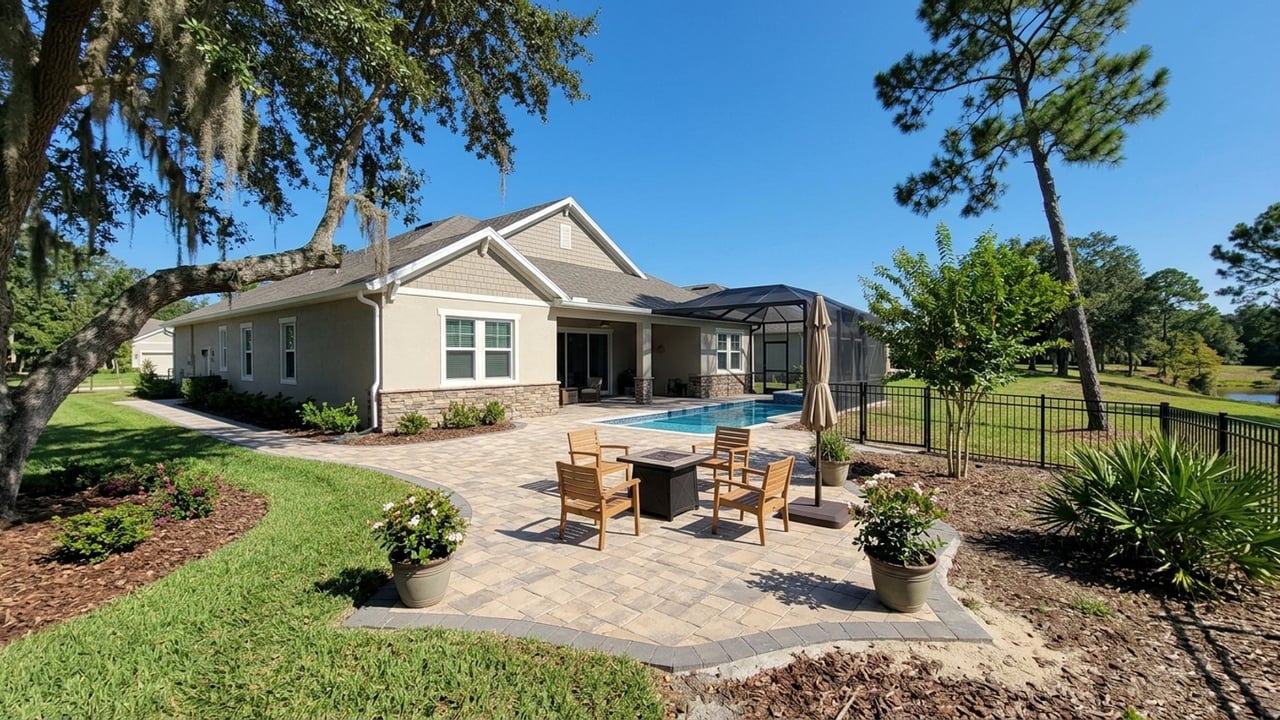
What to Expect From Seller Disclosures in Odessa, FL
Blog Anne Bromberg October 5, 2026
Blog Anne Bromberg October 5, 2026
The median home sale price in Odessa, FL, is currently around $540,000. When you're spending that kind of money, you deserve a straight answer about what you're buying, and anyone selling a home in Odessa, FL must be prepared to provide one.
Florida law places specific obligations on sellers to reveal known defects that could affect a property's value. These rules help sellers avoid post-closing lawsuits and give buyers a clearer picture of the home's true condition.
Homes in the Odessa market currently spend roughly 49 days on the market before selling. During that window, the seller's property disclosure is one of the most important documents you'll touch.
A seller disclosure statement is a document where the current owner outlines known issues, past repairs, and the general condition of the property. The agent provides the form. The seller fills it out, based on their own knowledge - nobody else's.
You'll often see this document called an SPD (Seller Property Disclosure) or SRPD (Seller Real Property Disclosure). In Florida, the most common versions of these forms are created by the state's association of Realtors rather than a government agency.
Sellers work through a series of yes-or-no questions covering the roof, plumbing, electrical systems, and structural integrity, with space to explain any past issues and how they were resolved.
For buyers, the disclosure statement is essentially a roadmap for the home inspection - it tells the inspector exactly where to look harder.
For sellers, completing this form thoroughly reduces legal liability. A written record of known defects makes it very difficult for a buyer to claim they were deceived after the sale closes.
Florida's requirement for sellers to disclose property defects doesn't come from a single general statute. The foundation of the state's disclosure law stems from a 1985 Florida Supreme Court case, Johnson v. Davis.
That ruling set a clear standard: if a seller knows about facts that materially affect the property's value, and those facts aren't readily observable to the buyer, the seller must disclose them. This legal duty applies to all residential real estate transactions in the state.
Sellers must inform buyers about hidden material defects - a leaking roof, unpermitted additions, faulty wiring. The standard is based on the seller's actual knowledge, so you're not required to hire an inspector to hunt for problems you genuinely don't know about.
What you do know about, you have to report. If you're aware of an issue that lowers the home's value and a buyer can't easily spot it themselves, it goes on the disclosure - regardless of whether you use a standard association form or another written format.
Listing a home "as-is" means the seller won't make repairs before closing. It does not exempt the seller from the legal duty to disclose known, hidden defects.
An as-is contract shifts the cost of repairs to the buyer. The disclosure statement is still required, and the Johnson v. Davis standard still applies.
Failing to disclose a known material defect can lead to serious legal consequences. Buyers who discover hidden issues after moving in can sue for breach of contract or fraud. If a court finds the seller intentionally withheld information, the seller may be ordered to pay for repairs - and in some cases, the court can rescind the sale entirely.
Buyers and sellers often confuse property condition disclosures with sale price disclosures. These two concepts operate independently under Florida law, and mixing them up causes real confusion.
Some buyers hear that Florida is a non-disclosure state and assume they won't get any information about the house. That's a misreading of how the law works.
When people call Florida a "non-disclosure state," they're referring to the fact that buyers can request their purchase price be kept out of certain public tax records. It has nothing to do with hiding a home's physical condition.
The duty to disclose property condition is mandatory under case law. Sellers can't use the state's public record policies to avoid telling a buyer about a failing air conditioning unit or a cracked foundation.
Buyers in Odessa will still receive full property condition disclosures during their transaction. The seller must outline the home's history and any known defects.
Read the disclosure form carefully, and share it with your home inspector before they go through the property. They'll use it to verify the condition of the home's major systems - and to push harder on anything that's been flagged.
The standard Florida real property disclosure form breaks the home down into specific categories. Sellers work through each section and indicate whether they know of any past or present issues.
The form covers everything from the property's legal status - including homeowners association rules - to the physical structure. Recent changes to Florida law have also added strict requirements around specific environmental hazards, so this isn't a document to skim.
Sellers must detail the age and condition of the roof, HVAC system, plumbing, and electrical wiring. If the seller replaced the water heater or repaired a leak, it gets noted here.
The form asks about structural components like the foundation and load-bearing walls, and sellers must also disclose if any work was done without the proper county permits. That last one matters more than people expect.
Florida law imposes specific hazard disclosure rules that directly affect Odessa properties. As of October 1, 2024, House Bill 1049 requires sellers to provide a written flood disclosure before or at the time the sales contract is signed, detailing any past flood-damage insurance claims or federal flood assistance received.
A rule change in late 2025 further expanded these requirements, and sellers must now disclose any known flood damage during ownership, even if no insurance claim was ever filed. Under Florida Statute § 627.7073, sellers must also disclose sinkhole activity or repairs, and specify whether an insurance payout was fully used to repair the sinkhole damage.
The disclosure form includes space for sellers to explain the history of any defect they've checked off. If a pipe burst three years ago, the seller describes what happened and who fixed it.
A long list of professional repairs isn't automatically a red flag - often it signals a seller who stayed on top of the property. Context matters, so read those notes carefully.
Odessa homes are currently selling for about 95.5% of their list price, which reflects a fairly balanced negotiating environment. Buyers and sellers set disclosure deadlines directly in the purchase contract, so the timeline isn't one-size-fits-all.
That said, missing a deadline can delay a closing - and one of these deadlines is set by statute, not negotiation.
Florida doesn't set a single statutory deadline for the general property condition disclosure form. The delivery date is a negotiated term written into the purchase agreement, usually within a few days of the effective date.
The flood disclosure is different. Under Section 689.302, sellers must deliver the FD-1 flood disclosure at or before the time the sales contract is executed. That one isn't flexible.
Florida doesn't offer a general statutory rescission period for standard single-family home sales after a buyer receives a disclosure. Your opportunity to cancel depends entirely on the inspection or due diligence window negotiated in the contract - typically 10 to 15 days.
Condominiums operate under different rules. Buyers purchasing a condo have a 7-business-day rescission period after receiving the required condo association documents, a timeframe that expanded from 3 days in July 2025.
Odessa spans both Pasco and Hillsborough counties, but neither county records seller property condition disclosures in the public record. These forms stay private - they're contractual documents between buyer and seller, not public filings.
What the counties do record strictly are documents that convey title. As of January 1, 2024, both Pasco and Hillsborough counties require two witnesses for recorded real property documents, with the names and post office addresses of those witnesses clearly listed.
It is a written document where the seller outlines known material defects about the property. The requirement to disclose these facts comes from the 1985 Florida Supreme Court case Johnson v. Davis.
No, Florida requires sellers to disclose known property defects that materially affect the home's value. The term "non-disclosure state" refers to keeping the final sale price out of certain public tax records, not hiding the physical condition of the house.
Sellers must disclose any known facts that materially affect the value of the property and are not readily observable to the buyer. This includes specific statutory requirements to disclose past sinkhole claims and recent flood damage or federal flood assistance.
The general property condition form does not have a statutory deadline and is dictated by the purchase contract. However, the statutory FD-1 flood disclosure must be delivered at or before the time the sales contract is signed.
Yes, you still have to provide a disclosure statement. Selling a home "as-is" means you will not make repairs, but it does not remove your legal duty to disclose known, hidden defects to the buyer.
Failing to disclose a known material defect can result in a post-closing lawsuit from the buyer. A court may order the seller to pay for the necessary repairs or, in severe cases, rescind the sale entirely.
Yes, Florida law specifically requires sellers to disclose sinkhole activity or repairs. If an insurance claim for a sinkhole was paid out, the seller must disclose that fact before closing and state whether the funds were used to repair the damage.
Stay up to date on the latest real estate trends.




Blog
Blog
Blog
Blog
Blog