Understanding Water Utilities in Odessa, FL: City Water vs. Well Water in 2026
Blog Anne Bromberg September 1, 2026
Blog Anne Bromberg September 1, 2026
The median home price in Odessa, FL sits around $544,000, and buyers currently have about 47 homes to choose from in the active inventory. Anyone weighing the pros and cons of living in Odessa, FL will find that this area runs the full spectrum - dense suburban subdivisions on one end, spacious rural acreage on the other - so the properties on the market carry a real mix of public and private infrastructure.
Homes sell in roughly 28 days here. That's not a lot of time to think. Knowing how the local water systems work before you start touring means you can budget for monthly costs and future maintenance without scrambling during the inspection period.
Pasco County Utilities (PCU) is the primary provider for residential water and sewer in Odessa. The Florida Governmental Utility Authority (FGUA) also manages connections in a handful of specific neighborhoods. Beyond the reach of those municipal lines, homes draw from the Floridan Aquifer through private wells.
Which system a house uses determines how you pay for water - and who picks up the phone when something goes wrong.
Municipal water is essentially hands-off. The county handles treatment, pressure, and delivery; you get a monthly bill based on usage and a consistent supply you don't have to think about.
A private well puts you in charge. No monthly water bill to the county, but you own every part of the system - the pump, the filtration, the repairs. When the equipment breaks, that's your contractor and your bill.
Newer subdivisions and master-planned communities almost always tie into the county utility grid. Developers run the lines during construction, so every house comes with immediate access to public water and sewer.
Older homes, equestrian properties, and anything sitting on significant acreage tend to run on private wells. Extending county lines to a rural lot is expensive, so on-site groundwater is usually the practical answer for spread-out properties.
Municipal water runs from a centralized treatment plant through underground pipes to a meter on your property. The county monitors the supply continuously and treats it before it ever reaches your faucet. A private well is a personal water source drilled directly into your lot - you own the equipment, and you're entirely responsible for pulling water out of the aquifer and making it usable.
The county draws from regional sources, treats the water at a large-scale facility, and pushes it through a network of underground pipes. There's a meter near the street that tracks exactly how many gallons flow into your house, and PCU reads it regularly to calculate your monthly charges.
Residential wells come in several varieties - drilled, driven, dug, and bored. Drilled wells are the most common in this region because they reach deep into the Floridan Aquifer and pull a consistent supply. They use an electric pump to bring the water up and a pressurized tank to distribute it through the house.
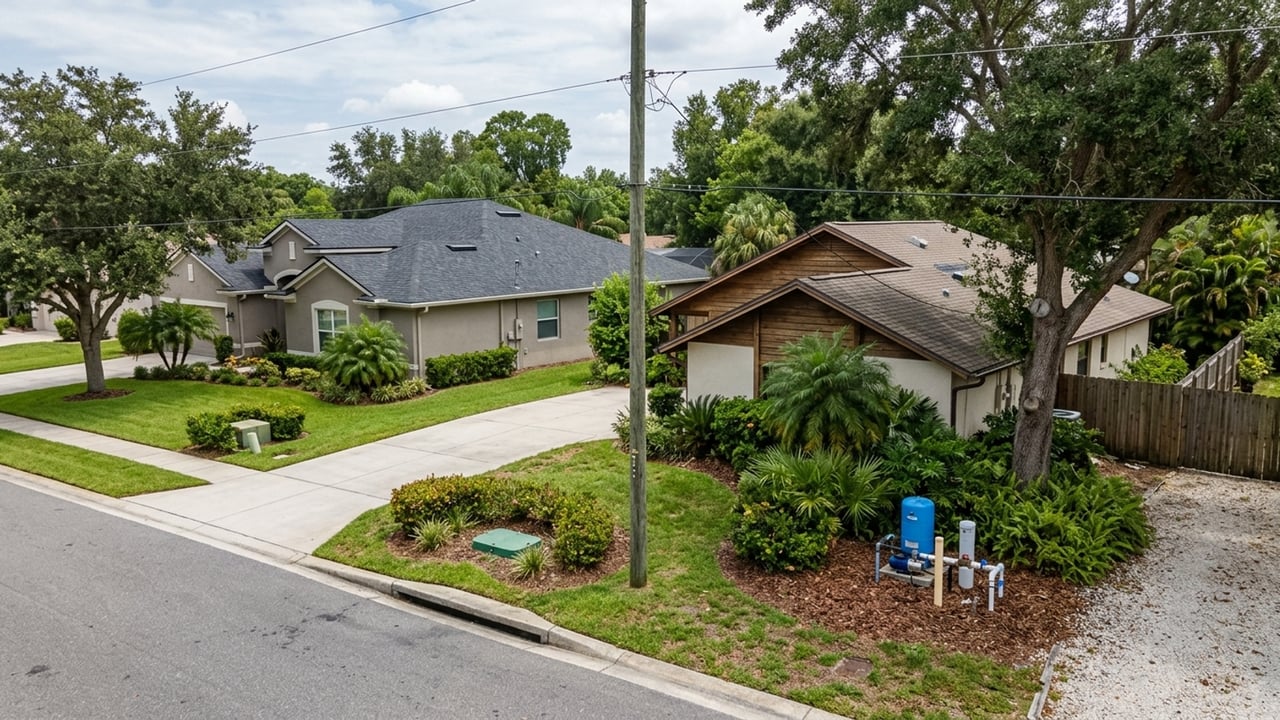
Walk the property. A county water meter box near the street or sidewalk means municipal service. A wellhead - usually a PVC pipe capped and sticking up from the ground - along with a pump system in the yard means private groundwater. It's usually pretty obvious once you know what to look for.
Under the Pasco County Utilities FY26 rate schedule, the base water rate for a standard 5/8-inch or 3/4-inch meter is $11.00 per month. That base fee covers up to 8,000 gallons before tiered volumetric charges kick in. Well owners don't pay this rate or any per-gallon charges - their costs show up on the electric bill from running the pump, plus whatever filtration maintenance the system needs.
For FY26, which took effect on October 1, 2025, the average residential customer using 6,000 gallons per month pays $91.99. That figure covers combined water and sewer service and reflects a slight increase from the prior year. Rates adjust periodically, so treat this as a baseline rather than a guarantee.
Skipping the monthly water bill doesn't mean free water. The electric pump adds to your power bill every month, and filtration systems need regular salt or filter replacements. Budget for periodic pump servicing and, eventually, equipment replacement - these systems don't last forever.
For municipal customers, going past the 8,000-gallon base allowance triggers tiered pricing, which means a higher cost per gallon. Irrigation systems are the most common culprit for a bill that jumps unexpectedly. Filling a pool or running water features pushes usage into those more expensive tiers fast.
Homes on private wells almost always use private septic systems too - they're not on the county sewer lines, so there's no sewer charge on the PCU bill. That's a real cost offset, but septic systems come with their own maintenance requirements, including pumping the tank every few years.
The Floridan Aquifer supplies groundwater across the entire region, but what comes out of your tap depends heavily on how it gets there. Municipal facilities treat and filter the supply before it enters the public pipes. Private wells pull raw groundwater, and that water frequently needs on-site treatment before it's ready to use.
PCU treats its supply to meet state and federal safety standards - that means removing harmful bacteria and balancing mineral content. Some residents run basic refrigerator filters for taste, but the water is ready to drink straight from the tap.
Well water in the Odessa area commonly contains iron and manganese, sulfur (which produces a distinct rotten-egg odor), tannins that turn water tea-colored, coliform bacteria, and runoff from fertilizers or pesticides. Regular testing isn't optional if you're on a well - you need to know what's in the water, and you need a filtration setup built for the specific contaminants common to this area.
Untreated groundwater high in iron leaves orange stains on sinks, toilets, and showers. Hard water keeps soap from lathering right and can make skin feel dry after a shower. Most well owners install a water softener to protect their fixtures and make the water livable.
A private water source has real financial advantages and real maintenance burdens. The no-monthly-water-bill appeal is genuine - especially for buyers with large lots or heavy irrigation needs. But when a pump fails, that repair bill can easily wipe out a full year's worth of what you would have paid the county.
A well gives you a flat-rate water supply. You can water a large lawn or fill a pool without watching a utility bill spike. You're also insulated from municipal main breaks and county-wide pressure problems - two things that do happen.
The whole system runs on electricity. A power outage cuts off your water immediately unless you have a backup generator. And when the pump goes or the pressure tank fails, you're calling a private contractor and paying the full cost yourself. There's no county to absorb that expense.
Some property owners abandon their wells and tie into county lines when municipal infrastructure expands into their area. That means paying connection fees and hiring contractors to run lines from the street to the house. Pasco County Utilities connection fees increase on an annual schedule - for FY26 they index at 3.75%, and from FY27 through FY29 they rise 4.75% annually.
You can only connect if municipal lines already run past your property. From there, you apply for an account with PCU, pay the required connection fees, and hire a plumber to route pipes from the street meter into your home's plumbing. It's a straightforward process, but it does require the infrastructure to already be there.
The exact dollar amount for a standard residential connection shifts with the annual indexing schedule. Check the official Pasco County Utilities rate schedule for the precise current fee before you commit to a conversion project - and factor in the private plumbing labor, which can add substantially to the total.
A lot of homeowners connect the house to city water while keeping the existing well active for irrigation. You get treated, reliable drinking water indoors and free groundwater for the lawn and landscaping. It's a practical setup that a lot of buyers in this area land on once they understand how the systems work.
A home with a private well demands more from your inspection period than a municipal property does. The standard home inspection rarely digs into the specifics of well pumps and underground aquifer conditions. Well construction permits for the Odessa area are issued by the Southwest Florida Water Management District (SWFWMD) - verify that the existing well was permitted and installed correctly before you move forward.
Hire a specialized well inspector to evaluate the pump, pressure tank, and filtration equipment. Order a comprehensive water test that checks specifically for iron, sulfur, coliform bacteria, and tannins. Don't skip this step - what's in the water matters for your health and your budget.
Ask the current owner for the well's depth, the age of the pump, and any recent water test records. Get the maintenance history on the water softener or filtration system too. These units need consistent upkeep to work properly, and a system that's been ignored for a few years can be a significant expense waiting to happen.
Pasco County Utilities (PCU) is the primary provider for water and sewer, while the Florida Governmental Utility Authority (FGUA) serves some specific areas. For electricity, check local utility directories based on your exact property address - the provider depends on where the home sits.
Look for a county water meter near the street, or check your property tax bill for utility assessments. For wells, look for a wellhead and pump equipment on the lot, or search for well permits through the Southwest Florida Water Management District (SWFWMD).
Connection fees vary and increase annually. For Pasco County Utilities, water and wastewater connection fees index at 3.75% in FY26 and will rise 4.75% annually through FY29. Consult the official PCU rate schedule for precise current deposit and setup amounts.
Pasco County manages water and sewer through PCU, but check with your specific homeowner's association or the county regarding trash services. Depending on your exact location, you may need to hire a private contractor for local waste collection.
As soon as you have a firm closing date, start the process. Contact Pasco County Utilities early to set up your water and sewer accounts - waiting until the last minute creates gaps in service that are easy to avoid.
Yes - test the well water for iron, manganese, sulfur, coliform bacteria, and tannins. A county-required water test isn't always a legal requirement to close, but most lenders will require a clean water test and a septic inspection before approving a loan.
Stay up to date on the latest real estate trends.


Blog

Blog

Blog
Blog

Blog

Blog

Blog

Blog