What Two Failed Wells on the Same Street Reveal About Buying in Odessa
August 27, 2026
August 27, 2026
As Tampa Bay 28 reported in April 2026, Cordes Owen turned on his kitchen faucet on an ordinary morning and watched the water run the color of a flooded river. Across the street, his neighbor Robert Lumpkin was dealing with the same thing, sand working its way through every fixture in the house. Both men live in Odessa, both rely on private wells, and both assumed that if something like this happened, the regional water utility would help cover the cost. Neither claim was approved. The repair bill for each ran close to $15,000, paid out of pocket.
That story is not really about two unlucky homeowners. It's about a gap between what buyers assume protects them on well and septic properties and what actually does. If you're looking at a home in Odessa that isn't on county water and sewer, the Owen and Lumpkin case is the clearest local evidence of where that gap sits, and it changes what a smart inspection period should focus on.
Tampa Bay Water operates a well mitigation program built for exactly this scenario: a private well affected by the utility's own groundwater pumping. Homeowners who believe their well failed because of nearby wellfield activity can file a claim. As of the utility's April 2026 statement, it had received 90 such claims over the prior two years. It had approved none. Three remained under review. The other 87 were denied.
The reasons for denial matter more than the number itself. Tampa Bay Water says that, to qualify, a well generally needs at least 147 feet of 4 or 5 inch galvanized steel or PVC casing, or 210 feet for wells near the South-Central Hillsborough Regional Wellfield, unless the well predates the nearest wellfield's operation and counts as an existing legal use. As reported by Tampa Bay 28, Tampa Bay Water's chief science officer, Warren Hogg, explained why the Owen and Lumpkin wells failed the way they did.
"Sand enters the well itself through those little pinholes or cracks just because of the age of the materials."
Both wells were over 50 years old. The utility pointed to declining pumping rates from nearby production wells, among the lowest in the wellfield's history, as evidence that groundwater levels weren't the culprit. Regional drought is real and affects a 16-county area, but in this case the agency said age and material fatigue, not the aquifer, caused the failure.
The takeaway for a buyer isn't that Tampa Bay Water is wrong or right about causation. It's that, as of its April 2026 statement, the program had approved zero claims out of 90 in the prior two years. If you're buying a well-served home in Odessa, check the well's age, casing material, and completion records rather than assuming the mitigation program functions like insurance.
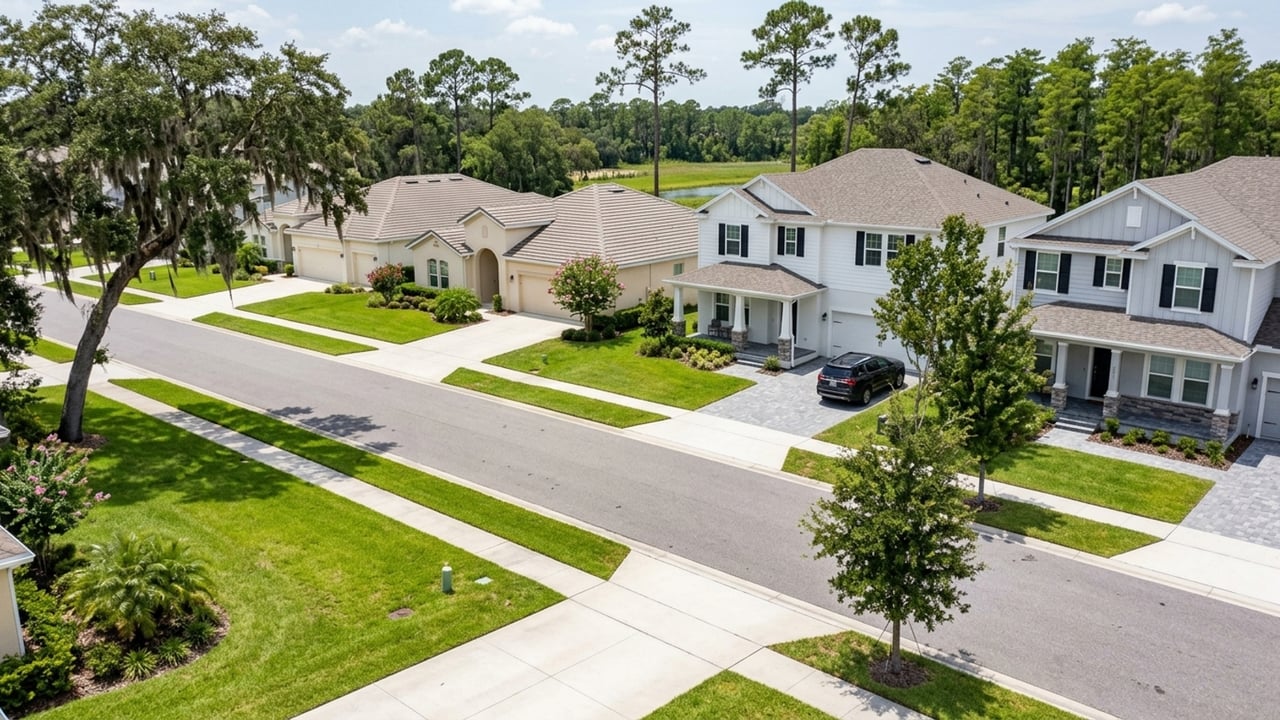
Odessa's housing stock didn't develop on one utility system. Newer master-planned communities were largely built with county water and sewer connections designed in from the start. Older acreage parcels, many left over from the area's ranching and grove history, often still run on private wells and septic systems installed decades ago. Which category a given house falls into depends on the specific address, not the general reputation of the town, and it has to be confirmed directly with Pasco County Utilities before you write an offer.
This is different from the fee-stack question that comes up in a community like Starkey Ranch, where every home sits inside the same master-planned utility and CDD framework. In Odessa proper, the split is structural. Two houses a quarter mile apart, similar price, similar age, can have completely different utility profiles. One buyer's due diligence checklist should include a well and septic inspection. The other's shouldn't need one at all. Skipping the step of confirming which situation you're in is the first mistake, before any inspection even gets scheduled.
Financing type changes what gets tested and when, and the differences are wide enough to affect your timeline.
| Loan Type | Water Quality Test | Septic Inspection Trigger | Distance and Flow Rules |
|---|---|---|---|
| Conventional | Mortgage Research says a septic inspection is typically needed only if an appraiser notes a problem | Left to buyer's discretion in most cases | |
| FHA | LoanPronto says a water quality test is required, must be from a certified lab or health authority, and is valid for 180 days | Inspection requirements apply | Well 50 ft from septic tank, 100 ft from drain field, minimum 3 gallons per minute flow |
| VA | Required, valid 90 days | Only if appraiser or soil conditions raise concern | Defers largely to local health authority standards |
| USDA | GetLoans says water quality testing is required for nearly all properties on a well | Required for nearly all properties with private septic | Distance and flow requirements apply |
A conventional buyer can often close without either system being touched. A USDA or FHA buyer almost certainly can't. If you're weighing loan options on a well and septic property in Odessa, that difference alone can add one to two weeks of lab turnaround time to your closing schedule, and it's worth confirming with your lender before you're deep into a contract.
A standard home inspection is not a well or septic inspection. Odessa-area inspection firms that regularly work on rural and acreage properties are upfront about this limit. They'll note signs that a well or septic system needs a closer look, but they typically don't test water quality or pump a tank themselves. That work goes to a licensed well contractor and a separate septic specialist.
Budget accordingly. A licensed well contractor's inspection, covering pump performance, pressure tank condition, and wellhead integrity, runs $150 to $350. A basic water panel testing for bacteria, nitrates, and hardness adds $75 to $150 through a certified lab, more if you expand the panel to include arsenic, lead, or manganese. A standard septic inspection with pumping included runs $200 to $600, averaging around $350 for a conventional gravity system. If either inspection turns up a real problem, the range widens fast: a well pump replacement at typical depth runs $1,500 to $3,000, and a failing drain field or compromised tank can run $3,000 to $15,000 or more to fix.
Florida adds a wrinkle that catches people off guard on the seller side. According to Septic and Well, Florida has no statewide requirement for a septic inspection at the point of sale. Florida is a caveat emptor state for real estate, and disclosure obligations are limited to known material defects, not to defects a seller never bothered to check for. That means a buyer's inspection contingency is doing almost all of the protective work here, not a state mandate. It also means a seller who pumps and inspects before listing, typically $400 to $800 for both, walks into negotiations with a clean report instead of reacting to whatever the buyer's inspector finds first.
One more detail worth knowing on either side of the transaction: Florida sizes septic systems by bedroom count, not bathrooms or square footage. A system built for a three-bedroom home that later gained a fourth bedroom without a permitted upgrade is overloaded by design, and that mismatch shows up in a thorough inspection.
None of this is happening in a neutral season. The Southwest Florida Water Management District placed the region under a Modified Phase III Extreme Water Shortage order effective April 3 through October 1, 2026, tightening irrigation windows and cutting Hillsborough County residents, including those on private wells, to one watering day per week. Tampa Bay Water has been urging continued conservation as drought conditions persist statewide, describing the region as being in a Stage 3 Regional Supply Shortage as of July 2026.
Stressed systems tend to reveal their weak points under stress. A 50-year-old well that's been running near the edge of its capacity is more likely to show sediment or flow problems during a dry summer than a wet one. If you're closing on a well-served Odessa property in the back half of this year, that's a reason to take the inspection window seriously rather than treat it as a formality, especially with typical home values in the Odessa zip code sitting around $664,000 as of early July 2026, a price point where a $15,000 well replacement is not a rounding error in anyone's budget.
Does Florida require a septic inspection before I can sell my home? No. There's no statewide point-of-sale mandate. You're only required to disclose septic problems you actually know about.
My well is decades old. Should I assume Tampa Bay Water's mitigation program will help if it fails? Treat that as unlikely. As of the utility's April 2026 statement, it had approved none of 90 such claims over the prior two years, largely due to casing age, construction standards, and location outside designated mitigation areas. A pre-purchase inspection that checks the well's age and completion records tells you more than the mitigation program ever will.
Is every home in Odessa on well and septic? No. It depends on the specific address and which subdivision it sits in. Confirm directly with Pasco County Utilities before assuming either way.
Well and septic questions are exactly the kind of local detail that can quietly derail a closing if nobody raises them early. If you're weighing a purchase in Odessa, or wondering what your own property's utility setup means for a future sale, Anne Bromberg Luxury Group can walk through the specifics with you and help you build an inspection and financing timeline that fits the property you're actually buying. Reach out to Get Your Home Valuation or talk through what to expect on your next Odessa purchase.
This article is general information, not legal, tax or financial advice. Consult a qualified professional about your situation.
Stay up to date on the latest real estate trends.

Blog
Blog
Blog
Blog
Blog
Blog
Blog